
Adroddiad blynyddol a chyfrifon 2025-2026
Mae ein hadroddiad blynyddol a’n cyfrifon yn amlinellu sut rydym wedi cyflawni ar gyfer pobl, lleoedd a natur ledled Cymru yn ystod 2025-26.
Mae'r adroddiad yn esbonio:
- y cynnydd rydym wedi'i wneud yn erbyn ein blaenoriaethau
- sut rydym wedi defnyddio arian cyhoeddus
- yr heriau sy'n wynebu amgylchedd Cymru
- effaith ein gwaith i ddiogelu cymunedau, gwella ansawdd yr amgylchedd a chefnogi adferiad byd natur.
Darllenwch Adroddiad blynyddol a chyfrifon 2025-26 (PDF 49MB heb fod yn gwbl hygyrch).

Rhagair y Cadeirydd
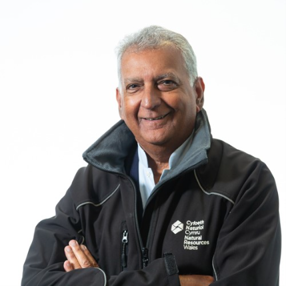
Neil Sachdev, Cadeirydd, Cyfoeth Naturiol Cymru:
“Mae angen CNC hyderus ac uchelgeisiol ar Gymru. Rwy'n credu mai ni yw'r sefydliad hwnnw – ac mae ein Hadroddiad Blynyddol yn rhoi cyfrif clir o'n perfformiad, y cynnydd rydym wedi'i wneud, a maint yr her sydd o'n blaenau.”
Darllenwch ragair llawn y Cadeirydd.
Cyflwyniad gan y Prif Weithredwr

Ceri Davies, Prif Weithredwr, Cyfoeth Naturiol Cymru:
“Mae maint yr her sy'n wynebu adnoddau naturiol Cymru yn glir. Rydym yn canolbwyntio ar yr hyn sydd bwysicaf, ac rydym yn cynyddu'r ddarpariaeth ar draws y sefydliad."
Darllenwch gyflwyniad llawn y Prif Weithredwr.
Maint yr her sy'n wynebu Cymru
Mae amgylchedd naturiol Cymru dan bwysau cynyddol.
Mae newid hinsawdd, llygredd, colli cynefinoedd a'r ffordd rydym yn defnyddio tir a dŵr i gyd yn rhoi pwysau ar ein hafonydd, ein bywyd gwyllt a'n tirweddau.
Adroddiad ar Sefyllfa Adnoddau Naturiol (SoNaRR) 2025 yw archwiliad swyddogol Cymru i iechyd ein hamgylchedd. Mae'n dwyn ynghyd y dystiolaeth ddiweddaraf i ddangos beth sy'n newid, pam mae’n bwysig, a ble mae angen gweithredu fwyaf.
Drwy gydol ein Hadroddiad Blynyddol, fe welwch rybuddion SoNaRR. Mae'r rhain yn tynnu sylw at y signalau pwysicaf o'r dystiolaeth honno. Maent yn dangos lle mae Cymru'n wynebu'r pwysau amgylcheddol mwyaf a pham na allwn aros wrth weithredu.
Ymhlith y dystiolaeth allweddol mae:
- un rhywogaeth o bob pump mewn perygl o ddiflannu
- dim ond tua 40% o afonydd, llynnoedd a moroedd mewn cyflwr da
- y rhan fwyaf o gynefinoedd mewn cyflwr gwael
- perygl llifogydd a risgiau hinsawdd yn cynyddu
- pwysau cynyddol ar adnoddau dŵr
Mae'r rhybuddion hyn yn rhoi trosolwg o faint a brys yr her.
Nid materion ar wahân yw'r rhain.
Pan fydd ansawdd dŵr yn dirywio, bydd bywyd gwyllt yn dioddef. Pan fydd cynefinoedd yn cael eu difrodi, bydd cymunedau'n gallu gwrthsefyll newid hinsawdd yn waeth Pan fydd risgiau hinsawdd yn cynyddu, bydd y pwysau ar dir a dŵr yn cynyddu.
Mae’r rhybuddion SoNaRR yn rhoi'r cyd-destun ar gyfer popeth yn yr adroddiad hwn. Maent yn helpu i egluro pam fod ein gwaith yn bwysig, lle mae cynnydd yn cael ei wneud, a pham fod angen gweithredu yng Nghymru ar raddfa mwy a chyflymder cynt.
Adroddiad ar berfformiad
Eleni, gwnaethom gyflawni’r holl ymrwymiadau yn ein cynllun busnes a pharhau i fuddsoddi yn y systemau, y bobl a'r dystiolaeth sydd eu hangen ar gyfer y dyfodol.
Mae ein gwaith wedi helpu i:
- wella cynefinoedd a diogelu bywyd gwyllt
- lleihau difrod amgylcheddol
- cryfhau rheoleiddio a gorfodi
- gwella amddiffyniad rhag llifogydd
- cefnogi ynni adnewyddadwy a datgarboneiddio
- gwneud gwell defnydd o dystiolaeth a data wrth wneud penderfyniadau
Fodd bynnag, mae heriau amgylcheddol yn cynyddu'n gynt na'r adnoddau sydd ar gael.
Er mwyn cael mwy o effaith, mae angen i ni weithio’n wahanol – gan ganolbwyntio ar y risgiau mwyaf, gweithio’n agosach gyda phartneriaid a helpu eraill i gymryd camau ochr yn ochr â ni.
Darllenwch ein hadroddiad perfformiad llawn.
Sut y gwnaethom gyflawni ein hamcanion llesiant
Mae ein cynllun corfforaethol hyd at 2030 - Natur a Phobl yn Ffynnu Gyda'n Gilydd yn arwain ein gwaith.
1. Cefnogi adfer byd natur
Gwnaethom gynnydd da eleni, gan gryfhau gwarchodaeth ar gyfer byd natur a chynnwys pobl ledled Cymru. Mae adfer byd natur yn cymryd amser, ond rydym yn gwneud cynnydd.
Yr hyn a gyflawnwyd gennym
- Wedi ymgysylltu â mwy na 45,000 o bobl drwy’r rhaglen Natur am Byth hyd yma
- Gwaith wedi'i gyflawni ar draws 100 o safleoedd gwarchodedig
- Cynlluniau ar gyfer safleoedd gwarchodedig wedi'u diweddaru a chanllawiau newydd wedi'u datblygu
- Wedi cefnogi penderfyniadau cenedlaethol ar dirweddau, gan gynnwys proses Parc Cenedlaethol Glyndŵr
Pam mae hyn yn bwysig
Mae mwy o bobl yn ymwneud â gwarchod byd natur, ac mae sylfeini cryfach ar waith ar gyfer adfer hirdymor.
Darllenwch fwy am sut rydym yn helpu i adfer byd natur.
2. Meithrin y gallu i wrthsefyll y newid yn yr hinsawdd
Mae llifogydd, sychderau, stormydd a thanau gwyllt yn dod yn fwy cyffredin. Cyflawnwyd ein nod eleni drwy helpu cymunedau i baratoi ar gyfer y risgiau hyn ac ymateb iddynt, ac addasu i hinsawdd sy'n newid.
Yr hyn a gyflawnwyd gennym
- Gwarchod 90,000+ eiddo trwy amddiffynfeydd rhag llifogydd sy’n cael eu cynnal a’u cadw gan CNC
- Gwell gwarchodaeth ar gyfer 1,000+ eiddo trwy ein gwaith cynnal a chadw cyfalaf
- Wedi ennill statws arian sefydliad sy’n llythrennog o ran carbon
- Wedi datblygu canllawiau ac offer digidol i gefnogi'r sector ynni adnewyddadwy a datgarboneiddio mewn diwydiant
Pam mae hyn yn bwysig
Mae cymunedau’n cael eu diogelu'n well ac yn fwy gwydn o ran perygl llifogydd a risgiau hinsawdd.
Darllenwch fwy am sut rydym yn helpu i adeiladu gwydnwch yn erbyn newid hinsawdd.
3. Lleihau llygredd
Mae dŵr glân, ecosystemau iach a chymunedau ffyniannus yn dibynnu ar leihau llygredd.
Eleni, gwnaethom dargedu’r risgiau mwyaf a chryfhau ein dull rheoleiddio, gyda chamau gweithredu wedi'u targedu fwy a phenderfyniadau cyflymach. Gwnaethom berfformio’n dda, er i ni fethu un o'n targedau.
Yr hyn a gyflawnwyd gennym
- 507 o ffermydd wedi'u harolygu – ddim yn cyrraedd ein hymrwymiad yn gyfan gwbl
- 404 cilomedr o afon wedi'i gwella
- 157 o ymchwiliadau i fethiannau ansawdd dŵr
- Dros 95% o benderfyniadau gorfodi wedi'u gwneud o fewn 3 mis
- Blaenoriaethu digwyddiadau risg uchel
- Cryfhau partneriaethau i fynd i'r afael â throseddau gwastraff a thipio anghyfreithlon
Pam mae hyn yn bwysig
Mae camau gweithredu wedi'u targedu yn gwella ansawdd yr amgylchedd ac yn helpu i atal difrod pellach.
Darllenwch fwy am ein gwaith i leihau llygredd.
Llywodraethu ac atebolrwydd
Rydym yn atebol i Lywodraeth Cymru, y Senedd a phobl Cymru.
Mae ein trefniadau llywodraethu yn cynnwys Bwrdd, Tîm Gweithredol a phwyllgorau annibynnol sy'n goruchwylio risg, cyllid a chyflawni.
Darllenwch ein hadroddiad llywodraethu ac atebolrwydd yn llawn.
Ein pobl
Ar 31 Mawrth 2026, roeddem yn cyflogi 2,492 o bobl ledled Cymru.
Maent wrth wraidd popeth a wnawn, o ddiogelu cymunedau yn ystod llifogydd i adfer cynefinoedd a mynd i'r afael â llygredd.
Yn ystod y flwyddyn, gwnaethom recriwtio staff newydd ar gyfer rolau â blaenoriaeth. Helpodd hyn i gryfhau ein gwasanaethau, ond roedd hefyd yn golygu bod timau’n treulio amser yn cefnogi ac yn hyfforddi cydweithwyr newydd.
Rydym yn adeiladu gweithlu sy'n hyblyg ac yn barod am newid. Rydym yn defnyddio rolau cyfnod penodol, staff dros dro a chymorth arbenigol pan fo angen. Mae hyn yn ein helpu i ymateb yn gyflym, rheoli risgiau ac osgoi newidiadau ar raddfa fawr i'r sefydliad.
Uchafbwyntiau
- Arhosodd trosiant staff yn isel ar 5.7% (6.3%)
- Mae ein bwlch cyflog rhwng y rhywiau yn parhau i fod yn isel ar 1.7%.
- Cwblhaodd 76% o gydweithwyr hyfforddiant ymwybyddiaeth o'r Gymraeg
- Mae tua 23% o gydweithwyr yn siaradwyr Cymraeg rhugl
Darllenwch ein hadroddiad pobl yn llawn.
Trosolwg ariannol
Fe wnaethom reoli ein cyllid yn ofalus yn ystod y flwyddyn, gan gynnal sefyllfa sefydlog wrth ymateb i'r galw cynyddol a phwysau amgylcheddol.
Cyfanswm ein cyllid oedd £288 miliwn, sy'n cynnwys y canlynol:
- £149m o gyllid cymorth grant gan Lywodraeth Cymru, i gefnogi ein cyfrifoldebau craidd
- £139m o daliadau, grantiau gan Lywodraeth Cymru ac incwm arall, sy'n adlewyrchu ein rôl reoleiddiol a'n gwaith partneriaeth
Fe wnaethom ddefnyddio'r adnoddau hyn i gyflawni ein blaenoriaethau a chynnal gwasanaethau hanfodol ledled Cymru.
Roedd gwariant yn canolbwyntio ar y canlynol:
- £135 miliwn (41%) ar gostau staff darparu'r bobl a'r sgiliau arbenigol sydd eu hangen i ddarparu gwasanaethau rheoleiddio, gweithrediadau a thystiolaeth
- £131 (90%) ar gyflawni gweithredol – gan gynnwys gwasanaethau o ddydd i ddydd megis rheoli perygl llifogydd, diogelu'r amgylchedd a rheoli tir
- £62 (19%) ar fuddsoddiad cyfalaf – cefnogi seilwaith, asedau a rhaglenni gwella hirdymor
At ei gilydd, ein gwariant oedd £329 miliwn.
Darllenwch ein hadroddiad ariannol llawn.
Lawrlwythwch yr adroddiadau
Adroddiad Blynyddol a Chyfrifon 2025–26 (PDF 49MB heb fod yn gwbl hygyrch)